
When is your book ready to launch? Avoid the early launch trap
How do you know when your book is ready to launch? It might not be as soon as you think. Editor Jeff Toka offers readiness tips.
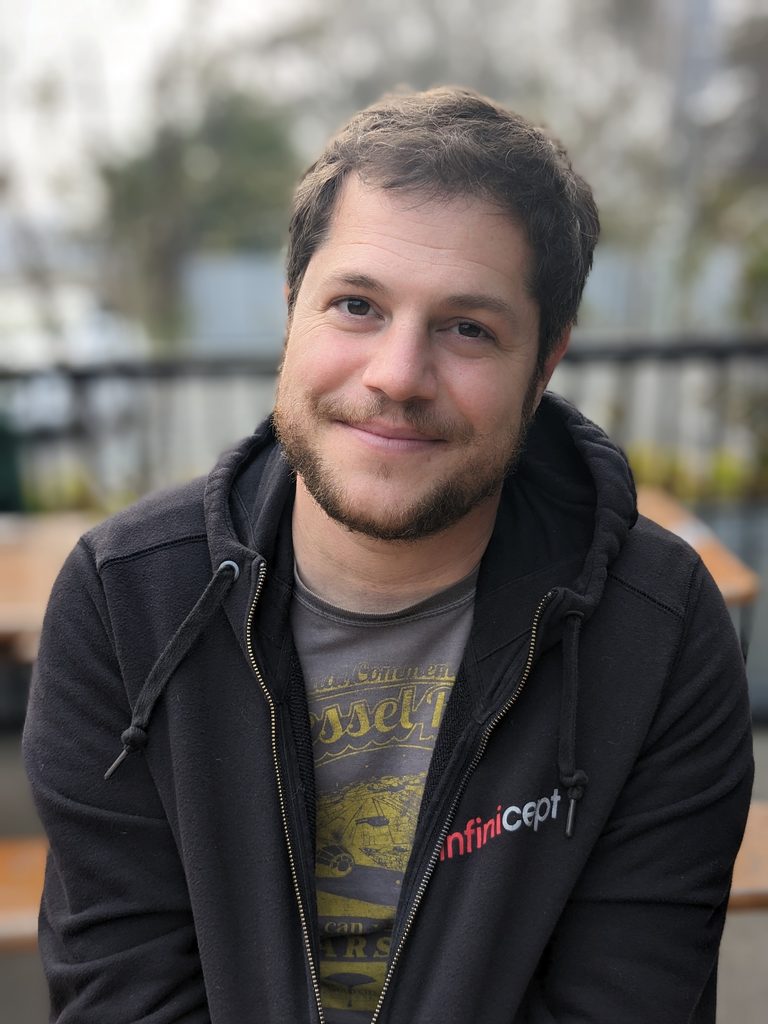
Our guest blogger today is Jeff Doka, who edits fiction at Final Boss Editing. Jeff’s published literary works include the novel “The Distributor,” the short story “The Conference,” and the novella “Departures.” He has also led game design for his sites Worldseekers and Bossfeed.fun.
When is your book ready to launch? Avoid the early launch trap
By Jeff Doka
We know what a book that launches too early looks like.
Even in the first chapter, we find spelling mistakes, tense changes, point-of-view shifts, and other problematic elements in a story.
The problem is, when it’s our book, it’s much more difficult to tell when it’s ready.
It gets more complicated when the issues are more subtle: secondary characters that don’t recur, setups that aren’t paying off later in the book, and other more craft-focused blockers to a manuscript’s success.
And when you’ve been staring at your own manuscript for so long that your eyes might just start spontaneously weeping if you look at it again, subtle and even larger issues can slip through the cracks.
So, before you close your eyes and hit the “Publish Now” button, let’s go through a quick checklist that can ensure you may rest in the knowledge that your book is really and truly ready to launch.
Does your drafting process match your best work?
Part of developing as a writer is knowing what drafting and revision process develops the best quality given your style.
Yes, everyone is different, and methods vary. Nevertheless, look at the fiction you’ve written that you’re most proud of, evaluate the process that got you to that level of polish, and ensure that your current project has gone through the same flow of drafting, revision, and polish.
For example, I often find that my best structured narratives come from the following workflow:
- I start with a logline (a one-sentence summary of the main plot).
- I divide the story into a few structural beat sheets. I like to do multiple, differing outlines.
- Then, I expand the beat sheet into a scene-by-scene outline before writing the draft.
If I discovery-wrote a story and did not follow this outlining process, I would generally be more suspicious that there might be some structure issues with that new story. Does that mean I go back in time and make a logline? No.
But when it comes to revision, I’ll keep an extra eye out for structural issues and even consider doing a reverse-engineered outline to ensure the narrative logic holds up.
Pace your story for today’s audience
Every writer alive has a new and vicious competitor: TikTok.
This might be an extreme example, but it’s true. Our most brutal competition is the phone in our readers’ hands and the social media all of us have grown a little too attached to. This makes writing, pacing, flow, and readability all the more critical to hold an audience’s attention.
A general rule of thumb is to look at your drafts’ word count and try to reduce it by 10 percent. Sometimes this can be incredibly difficult; sometimes it’s easier. However, reviewing the language in your project and finding opportunities to trim prose will always benefit the final result.
Use beta readers
Beta test your story as early and often – and with as many of your friends in your target audience – as possible. If your readers are willing, have them fill out a survey describing their favorite and least favorite parts of your work, the fastest and slowest parts, strongest characters, and so on.
Specific feedback is the point of beta readers. Don’t let them escape with just, “Oh… it was nice.”
And the most important piece of feedback a beta tester can give you is that they started, but didn’t finish. If you know someone has read the first few chapters but they stalled at a certain point in the narrative, that point is where revision is all the more necessary.
Create and use a final checklist
When we write the words “The End,” we’re exhilarated.
We’ve just felt and experienced all the high points of the story – we wrote them, after all. Taking a moment to slow down and follow a procedure, even if it’s one that you have devised for yourself, ensures that your project releases in its best possible state.
So what are some of the to-dos on my final checklist? I’m so glad you asked. Here are five of them.
1. Read the draft aloud.
Everybody tells you this because it’s good advice. Read your draft aloud or have a robo reader read it aloud to you.
Listen to the entire project or manuscript start to finish. You can use the free robo reader I’ve built on the “Library” page of my site, bossfeed.fun. Create an account, sign in, upload your manuscript as an ePub or Word (.docx) file, open it, and tap Listen. It reads your book aloud while you follow along.
2. Wait a few weeks… if not more.
This is difficult, but putting a story down for a few weeks, months, or even longer can make the revision upon returning extremely fruitful. If we give ourselves some time to forget the details of each scene, we can often return to them with fresh eyes.
3. Reverse engineer an outline.
Who says outlines are only for before you write?
Once a draft is done, read through it and jot down one line per scene: what happened and what changed. That’ll give you an outline from the text itself.
Reading your story as a bare skeleton makes it easier to spot plot holes, scenes that don’t drive action forward, and setups that need payoffs.
4. Perform your dialogue and scenes.
I borrowed this from the “table read” fixture of screenwriting.
Before a movie is filmed, the cast meets around a table and each performer reads their character for the entirety of the screenplay.
Create your own: Get a few friends, buy them pizza, dinner, or whatever is necessary, and assign each of them a character. Read through the big plot moments of the story.
5. Get an external editor.
While many third-party editors seem to function more as proofreaders, you might want to contract with a good development editor, too.
It’s not cheap, but a fresh pair of eyes will often spot issues in your work that you would miss the first or even the fifth time through.
If you can’t afford a professional, recruit a literate friend with a promise of pizza, treats, ice cream, or whatever is necessary to get new eyes on your manuscript.
Why suffer further?
I love the quote often attributed to Red Smith, “Writing is easy. You just open a vein and bleed.”
That’s sometimes what revising your work feels like. Going back to the page and starting the bleeding again can be excruciating.
So, why, why do we do it?
From my experience, it’s often the most painful drafts or the most seemingly unnecessary revisions that, when made, drastically improve the quality of the work. And the one thing that will give your writing its best chance at finding its audience is ensuring that the work itself is the best that you can bring forward.
When you’ve done all this, that’s when your book is ready to launch.
So happy writing, friends, and happy revising as well.
Is a book launch in your future? You need “The Ultimate Book Launch Timeline & Task Checklist,” an affordable resource I created just for you. Stop guessing about what to do and when to do it! Learn more and download your copy immediately at https://buildbookbuzz.gumroad.com/l/booklaunch
What’s your biggest self-editing challenge? Tell us in a comment.
Like what you’re reading? Get it delivered to your inbox every week by subscribing to the free Build Book Buzz newsletter. You’ll also get my free “Top 5 Free Book Promotion Resources” cheat sheet immediately!
